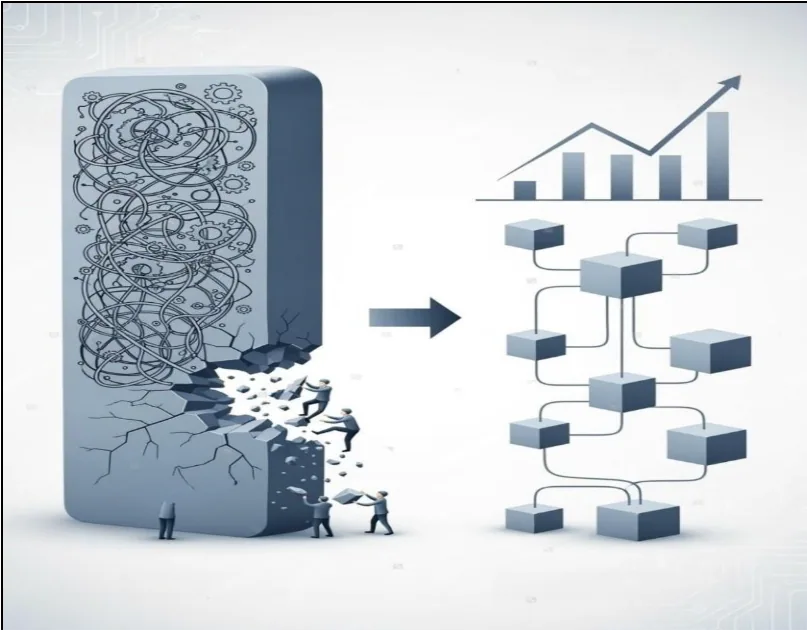




Manual software deployments in regulated industries come at a cost - untested code commits, skipped security scans, undocumented configuration changes and finally, audit exposure. While your competitors automate their way to faster, more secure deployments, manual processes leave you vulnerable to both regulatory penalties and competitive obsolescence.
The irony? Automation isn't the compliance risk - it's the compliance solution. Continuous Integration and Continuous Deployment (CI/CD) doesn't just accelerate software delivery, it transforms the compliance process from a periodic checkbox exercise into a continuous, verifiable, architecturally-enforced state which auditors can trust.
CI/CD and Compliance Delivery
Immutable Audit Trails That Auditors Trust
CI/CD pipelines automatically generate comprehensive, cryptographically verifiable audit logs for every action:
- Code commits tracked with identity, timestamp, and business justification
- Automated approval workflows documenting authorization chains
- Deployment histories providing forensic-grade change records
- Pipeline logs offering tamper-proof evidence for audits
- Artifact signatures ensuring integrity from development through production
SOX Example: For financial reporting systems under Sarbanes-Oxley Section 404, CI/CD provides the change management documentation and IT general controls that external auditors require. Every modification undergoes documented approval, automated testing validates reporting accuracy, and complete audit trails prove authorization - satisfying management assessment requirements without manual documentation.
Security Controls You Can't Bypass
CI/CD embeds compliance policies as architectural guardrails that cannot be overridden:
- Static Application Security Testing (SAST) catches vulnerabilities before production
- Dynamic Application Security Testing (DAST) validates runtime security
- Software Composition Analysis (SCA) flags vulnerable dependencies
- Container scanning ensures secure base images
- Infrastructure-as-Code validation checks configurations against compliance benchmarks
- Encryption verification confirms data protection requirements
HIPAA Example: Healthcare organizations handling protected health information embed HIPAA Security Rule requirements directly into pipelines. Automated testing validates access controls, encryption, and audit logging before any code reaches production. Technical safeguards under 45 CFR §164.312 become architectural requirements—making non-compliant deployments impossible.
Separation of Duties by Design
CI/CD architecturally enforces segregation through role-based access control and automated approval gates:
- Developers commit code but cannot deploy to production independently
- Security teams configure quality gates that cannot be bypassed
- Compliance officers define approval requirements enforced automatically
- Production access is eliminated for most personnel
GDPR Example: European data protection regulations require demonstrable accountability and data protection by design. CI/CD enforces Article 25 requirements by making privacy controls architectural. Data minimization checks, pseudonymization validation, and encryption verification occur automatically. When data protection authorities request evidence of technical measures under Article 32, organizations provide comprehensive pipeline logs showing security testing for every release.
Rapid Response Within Compliance Frameworks
When critical vulnerabilities emerge, CI/CD enables hour-based response while maintaining all compliance controls:
- Automated testing validates patches don't introduce regressions
- Security scans confirm vulnerabilities are resolved
- Staged rollouts limit blast radius if issues emerge
- Complete audit trails document emergency procedures
- Rollback capabilities provide immediate containment
GDPR Breach Notification Example: Article 33 requires breach notification within 72 hours. CI/CD enables organizations to deploy security patches in hours rather than weeks, often containing breaches before notification thresholds trigger. Comprehensive pipeline logs document the exact timeline of discovery, patch deployment, and containment - providing authorities with detailed incident response documentation.
Environment Consistency That Eliminates Configuration Drift
CI/CD with Infrastructure-as-Code eliminates the compliance violations that stem from environment inconsistencies:
- Identical environments created from version-controlled configuration
- Security settings propagate consistently across all stages
- Configuration changes undergo the same review as application code
- Automated compliance validation runs before environment provisioning
HIPAA Technical Safeguards Example: The Security Rule requires consistent access controls, encryption, and integrity controls across all PHI-handling systems. Infrastructure-as-Code ensures production environments automatically inherit security configurations tested in lower environments—eliminating gaps where production lacks validated controls.
Universal Regulatory Requirements Met Through CI/CD
Access Control and Authentication
Requirement: Technical controls ensuring only authorized individuals access sensitive systems.
CI/CD Solution: Multi-factor authentication, role-based permissions at every stage, automated access reviews, enhanced logging for emergency access, and built-in credential rotation.
Audit Logging and Monitoring
Requirement: Record system activity to detect incidents and demonstrate control effectiveness.
CI/CD Solution: Immutable logs of all activities, SIEM integration, real-time alerting on failures, centralized log management meeting retention requirements, and automated compliance reporting.
Data Protection and Encryption
Requirement: Protect sensitive data through encryption and technical safeguards.
CI/CD Solution: Automated encryption validation before deployment, infrastructure scanning for TLS/SSL configuration, secrets management preventing credential exposure, and data classification enforcement.
Change Management and Documentation
Requirement: Formal processes for authorizing, testing, and documenting changes.
CI/CD Solution: Standardized workflows, automated approval gates requiring business justification, testing evidence proving security isn't compromised, rollback procedures, and complete change history.
Implementation Roadmap for Regulated Organizations
Phase 1: Regulatory Assessment
- Document applicable frameworks and technical requirements
- Identify compliance gaps in manual processes
- Define security gates for each regulation
- Establish audit evidence collection requirements
Phase 2: Security-First Pipeline Design
- Select platforms with enterprise security and audit capabilities
- Implement multi-layered security scanning
- Configure approval workflows satisfying segregation requirements
- Enable extensive logging with cryptographic integrity
Phase 3: Validation and Audit Preparation
- Conduct internal audits using pipeline-generated evidence
- Engage external auditors early for validation
- Test control effectiveness on automated security gates
- Create compliance dashboards with real-time visibility
Phase 4: Continuous Improvement
- Monitor compliance metrics continuously
- Update controls as threats evolve
- Expand automation to additional portfolios
- Conduct regular compliance-focused training
What Auditors Want to Know
"How do you ensure controls operate effectively?"
Every pipeline execution generates comprehensive evidence. Auditors verify security scans, approvals, and test results for every deployment - not just samples. This continuous evidence surpasses periodic manual reviews.
"What prevents developers from bypassing controls?"
Platform-level enforcement. Developers cannot modify security gates, override failed scans, or deploy to production directly. Technical enforcement beats procedural controls.
"Can you demonstrate separation of duties?"
Role-based access creates inherent separation. Code authors cannot approve their changes. Developers cannot modify production infrastructure. Security controls quality gates but cannot commit code.
"How do you handle emergency changes?"
Pre-defined emergency procedures with appropriate approval workflows and enhanced logging. Even emergency changes undergo automated security testing and create complete audit trails.
The Strategic Advantage
Organizations implementing compliance-focused CI/CD gain measurable benefits:
- Audit efficiency: 60-80% reduction in audit preparation time
- Incident response: Hours instead of weeks for security patches
- Cost reduction: Automated controls allow teams to manage more applications with same resources
- Competitive edge: Continuous compliance accelerates contracts in regulated markets Risk mitigation: Consistent controls reduce violations, breaches, and penalties
The Real Question
The evidence is conclusive: automated pipelines satisfy regulatory requirements more effectively than manual processes. They provide stronger controls, accurate documentation and faster response times.
The question isn't whether CI/CD can meet compliance standards. It's whether your organization can afford the audit findings, breach notification failures, and competitive disadvantages of refusing to automate.
In an era demanding real-time controls and comprehensive evidence, CI/CD isn't optional for organizations serious about compliance - it's the only sustainable path forward.